


























Inside Nigeria’s Education Paradox: Policies Plenty, Results Scarce as Experts, Teachers, Graduates Speak Out
Inside Nigeria’s Education Paradox: Policies Plenty, Results Scarce as Experts, Teachers, Graduates Speak Out


In Nigeria, education is still widely promoted as the surest path to success. Parents call it a “meal ticket,” politicians describe it as the ladder out of poverty, and graduation ceremonies celebrate it as the nation’s great equaliser. But for millions of young Nigerians holding certificates today, that promise is fading fast
Across the country, classrooms are deteriorating, graduates struggle to find jobs, and education policies appear more abundant on paper than in practice. From overcrowded lecture halls in the north to under-equipped primary schools in the southwest, the contradiction is glaring that Nigeria has no shortage of education reforms, yet learning outcomes remain poor.
Education policy analyst Dr. Ayo Ogunleye, who has advised state governments on sector reforms, says the problem is not the absence of plans but the lack of execution.
“Nigeria has perfected the art of writing education policies, but implementation is where everything collapses,” he said. “We have committees, summits and reports, yet very little accountability. Reform often looks impressive on paper but changes little in the classroom.”
 As economic pressure, youth unemployment and migration continue to rise in 2026, investigations into the education system suggest the crisis goes beyond funding shortages. Structural loopholes, weak enforcement, outdated curricula and misplaced priorities are keeping the sector stuck in the past while the global economy moves forward.
Certificates Without Skills
Nigeria’s National Policy on Education was designed to guide the sector, but critics say it has struggled to keep pace with modern realities. While employers now demand digital literacy, analytical thinking and adaptability, many institutions still rely on rote learning and outdated course content.
Curriculum reviews are irregular, and there is no binding system requiring universities and polytechnics to align programmes with industry needs. The result is a growing gap between what students learn and what employers expect.
Sadiq Musa, a 25-year-old economics graduate in Abuja, said the transition from school to work exposed that gap.
“I graduated with good grades, but I realised I didn’t have the skills employers wanted,” he said. “In interviews they asked about software, data tools and practical experience we never learned in school. Everything I use at work today, I had to teach myself online.”
Industry groups estimate that more than half of Nigerian graduates require additional training before they can function effectively in the workplace, a trend analysts say reflects deeper structural problems.
Billions Unused While Pupils Learn on Bare Floors
One of the clearest examples of policy failure is the Universal Basic Education Commission (UBEC) matching-grant system. Under the law, states must provide counterpart funding before accessing federal education grants.
In theory, the arrangement ensures shared responsibility. In practice, billions of naira remain unused each year because some states fail to provide their share.
Education advocates estimate that over ₦100 billion in basic education funds has remained unaccessed in recent funding cycles, even as many public schools lack classrooms, furniture and teaching materials.
 Mrs. Funke Adeyemi, a public primary school teacher in Ogun State, says the consequences are visible daily.
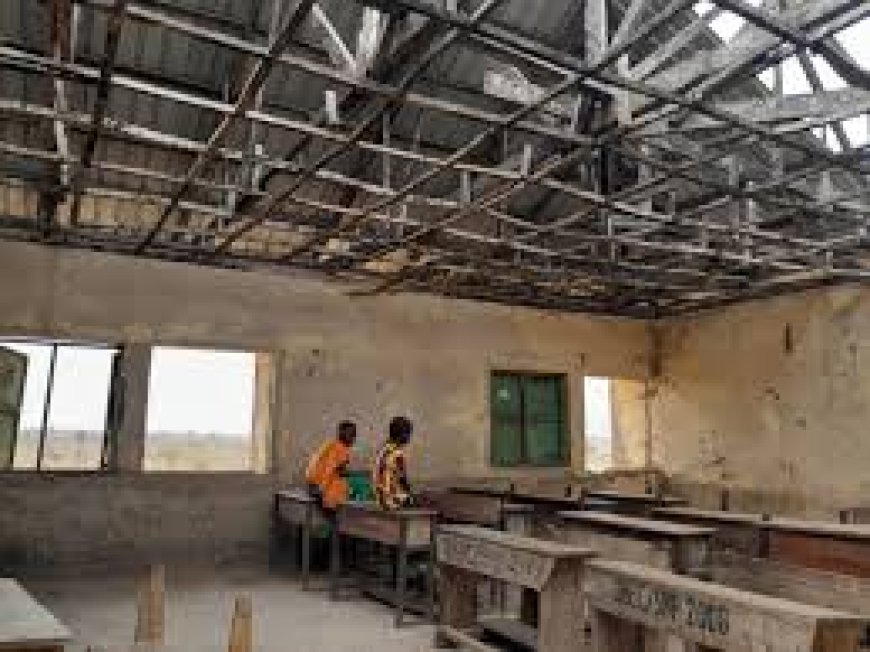
“We teach children in overcrowded classrooms, sometimes with no chairs,” she said. “When it rains, lessons stop because the roof leaks. We hear that funds are available, but they cannot be used because of government issues. The children are the ones paying the price.”
Analysts note that the law provides few penalties for states that fail to meet funding conditions, leaving enforcement weak and inconsistent.
“In a system with strong accountability, denying children access to education funds would attract sanctions,” Dr. Ogunleye added. “Here, it often leads to silence.”
New Buildings, Old Problems
At many tertiary institutions, newly commissioned buildings stand beside ageing facilities with broken windows, faulty wiring and outdated laboratories. Observers say this reflects a funding structure that favours visible projects over long-term improvement.
Interventions from the Tertiary Education Trust Fund (TETFund) frequently prioritise construction, while maintenance, technology upgrades and research support receive less attention.
“There is more political reward in building something new than in repairing what already exists,” Dr. Ogunleye explained. “You can commission a building publicly, but you cannot commission maintenance. That incentive shapes how money is spent.”
Students and lecturers say the result is a cycle where infrastructure expands, but the quality of teaching and research does not improve at the same pace.
Ideas That Never Leave the Library
Universities produce thousands of research projects every year, many proposing solutions in agriculture, energy, health and technology. Yet only a small number ever become real products or businesses.
Experts blame the absence of a strong link between academia, industry and finance. Without clear policies on research commercialisation, innovations often end at project defence.
“We generate ideas for grades, not for impact,” Dr. Ogunleye said. “There is no clear pathway from the classroom to the marketplace, so most research simply gathers dust.”
In countries with stronger innovation systems, universities work closely with industry, venture capital firms and government agencies to turn research into jobs and economic growth.
Teachers Leaving the Classroom
The education sector is also feeling the impact of Nigeria’s growing brain drain. Younger teachers are leaving for better-paying jobs or opportunities abroad, leaving schools with fewer experienced instructors.
Government efforts such as extending retirement age have done little to address the core issue of low pay and limited career growth.
“Passion cannot pay rent,” Mrs. Adeyemi said. “Young teachers start with enthusiasm, but after a few years they leave because the salary is not enough. Without better conditions, the system cannot keep talent.”
Labour experts say the absence of a specialised salary structure for educators has made teaching less attractive compared to other professions.
A National Problem Beyond the Classroom
Education specialists warn that the consequences go beyond schools. Poor learning outcomes contribute to unemployment, social unrest and slow economic growth, making it harder for Nigeria to compete globally.
According to Dr. Ogunleye, meaningful reform will require more than new policies.
“Nigeria does not lack ideas or funding,” he said. “What is missing is the political will to enforce accountability and put students and teachers at the centre of reform.”
Until that happens, the country’s long-held belief that education guarantees opportunity may continue to clash with reality of leaving many graduates holding certificates that open fewer doors than they were promised.
What's Your Reaction?















 The Chairman and Chief Executive Officer of Adron Homes and Properties Limited, Aare Adetola Emmanuelking, has congratulated the Government and people of Oyo State as the state marks its 50th anniversary, describing the occasion as a celebration of resilience, cultural pride, and sustained progress.