



















How POWA Is Rebuilding Hope in Police Families
How POWA Is Rebuilding Hope in Police Families

For many police families, the demands of the profession do not end when an officer leaves home in uniform.
Behind the long shifts, emergency calls and dangerous assignments are spouses who often manage households alone and children who grow up with the realities of a profession in which uncertainty is part of everyday life.
It is against this backdrop that the Police Officers’ Wives Association (POWA) is seeking to redefine what welfare should mean for families connected to the Nigeria Police Force.
Rather than concentrating solely on occasional financial assistance, the association under its current national leadership is placing greater emphasis on healthcare, education, economic empowerment, skills development and the emotional wellbeing of police families.
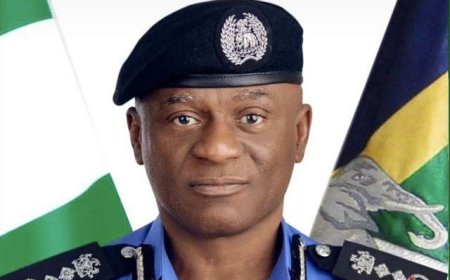
The approach was vividly demonstrated at Police House, Ikoyi, Lagos, where four beneficiaries of the POWA CARES Initiative were hosted to a dinner with Inspector-General of Police, IGP Olatunji Rilwan Disu, and the National President of POWA, Mrs. Olufunmilola Mutiat Disu.
For Patience Joshua, the gathering was particularly memorable.
Joshua was among four people selected during the POWA CARES outreach held in Lagos on April 29. The raffle winners, Joshua, Adama Mustapha, Jacinta Adam and DSP Tersorver Gwaikyaa had been promised an opportunity to dine with the Police First Family.
Months later, that promise was fulfilled.
But the evening offered the beneficiaries more than a meal. Each received a cash gift of N500,000, turning what had begun as a ceremonial raffle prize into tangible assistance for their families.
For Joshua, the intervention came at a time when financial support could make a significant difference.
“This money will cover so many things for my family,” she said, expressing gratitude and praying that the programme would continue.
Her reaction captured the emotional dimension of an initiative that is increasingly presenting welfare as something deeper than monetary intervention.
A different approach to welfare
Since Mrs. Disu assumed office as the 23rd National President of POWA on March 4, the association has placed renewed emphasis on building a structured support system for police families.
The administration's priorities include mental health, economic empowerment, entrepreneurship and skills acquisition, education and youth development, as well as improved welfare mechanisms capable of strengthening relationships among police families.
POWA CARES has emerged as one of the major vehicles for delivering that agenda.
The initiative combines immediate assistance with interventions designed to create longer-term opportunities.
At the Lagos outreach, more than 1,000 members of police families received medical services covering eye care, dental treatment and general healthcare.
Those requiring additional medical attention were referred for specialist treatment, while prescription glasses were also distributed at no cost to beneficiaries.
For families struggling to establish or maintain small businesses, the programme provided another form of support.
Two hundred families received N50,000 empowerment grants intended to help them develop small businesses and other income-generating activities.
Transportation needs were also considered, with raffle participants receiving N10,000 Cowry Cards.
The association equally directed attention towards the younger generation by awarding 15 nursing scholarships to children from police families.
The scholarship component is significant because education can provide opportunities that extend beyond the immediate circumstances of life in police barracks or police communities.
For children whose parents spend their working lives confronting crime and insecurity, access to quality education can become an important pathway towards professional independence.
The family behind the officer
The renewed attention to police families reflects an increasingly important conversation about the relationship between officers' welfare and effective policing.
Policing is physically and emotionally demanding. Officers may work extended hours, respond to emergencies at short notice and operate in environments where personal safety cannot always be guaranteed.
Those pressures inevitably affect the people waiting for them at home.
Wives may carry the responsibility of running households while their spouses are deployed. Children may become accustomed to absences that would be unusual in other professions.
The current POWA leadership appears determined to ensure that those sacrifices are recognised as part of the wider policing ecosystem.
Addressing beneficiaries at the dinner, Mrs. Disu described POWA CARES as an initiative driven by compassion and a desire to make police families feel appreciated and supported.
She also encouraged police wives to remain supportive of their husbands and to maintain stable homes that could provide officers with emotional strength as they perform their duties.
For the children, her message centred on discipline, education and determination.
She urged them to work hard, avoid negative influences and pursue their ambitions, expressing confidence that children of police personnel could excel in diverse professions and contribute to Nigeria's development.
The message was not simply about surviving life in a police family. It was about encouraging members of those families to imagine possibilities beyond their immediate circumstances.
“You are special women”
For the Inspector-General of Police, the contribution of police wives deserves greater recognition.
Speaking at the gathering, IGP Disu acknowledged the difficult responsibilities shouldered by police spouses and their contribution to the stability of officers' homes.
He described them as women who carry significant burdens while their husbands perform demanding national duties.
“You are special women,” he told them, acknowledging their role in caring for children and maintaining the stability that enables officers to concentrate on their responsibilities.
The IGP also praised children from police families who have distinguished themselves academically and professionally, encouraging them to continue pursuing excellence.
His intervention reinforced the idea that police welfare cannot be separated from family welfare.
An officer who knows that his or her family is supported may be better positioned emotionally to concentrate on duty. Conversely, unresolved family pressures can add another layer of difficulty to an already demanding profession.
This makes family welfare not merely a social responsibility but potentially an institutional investment.
Beyond grants and handouts
One of the more notable aspects of the current POWA approach is its attempt to combine relief with opportunity.
A cash grant can help a family address an immediate need. Medical care can remove the burden of an unexpected bill. A scholarship can change the trajectory of a child's life.
But together, such interventions can create a broader support structure.
The Lagos outreach therefore represented several dimensions of welfare operating simultaneously—healthcare, economic assistance, education, transportation support and personal recognition.
The decision to honour a commitment made months earlier also carried another message: credibility matters.
For the beneficiaries, the dinner was proof that a promise made during the April outreach had not been forgotten.
DSP Tersorver Gwaikyaa, one of the beneficiaries, viewed the gathering as evidence of a positive direction within the police leadership.
“I am highly elated to have the current IGP, Olatunji Disu, piloting the affairs of the Nigeria Police. We have seen a difference,” he said.
His comment reflected the sense of optimism surrounding the event.
Funke Akindele adds star power
The gathering also received support from Nollywood actress and filmmaker Funke Akindele.
Her appearance provided an additional source of excitement, particularly for the children who attended.
Akindele commended police wives for the responsibility they undertake in raising families while their husbands serve in demanding and sometimes hazardous conditions.
She also expressed appreciation to police officers for their service and pledged to continue supporting POWA when called upon.
Her participation brought public attention to a group whose contribution to policing is often less visible.
While officers receive uniforms, ranks and public recognition, the work performed within their homes frequently happens away from public view.
Investing in the next generation
Perhaps the most enduring element of the POWA CARES strategy is its focus on children.
The 15 nursing scholarships awarded through the initiative represent an investment that could continue producing benefits long after the immediate outreach has ended.
For a police family, a scholarship can mean the difference between a child abandoning an ambition because of financial constraints and gaining the opportunity to pursue a professional career.
The same principle applies to the economic empowerment grants given to spouses.
By helping families establish or strengthen income-generating activities, POWA is seeking to reduce financial vulnerability and encourage greater household resilience.
This is particularly relevant in an environment where the cost of healthcare, education, transportation and everyday living continues to place pressure on households.
A stronger institution from the home front
The wider significance of POWA CARES may therefore lie less in any single cash gift or medical outreach and more in the philosophy behind the interventions.
The programme recognises that the Nigeria Police Force is made up not only of officers but of families whose lives are directly connected to the demands of policing.
Supporting those families can strengthen morale, create a sense of belonging and demonstrate that service to the nation comes with a corresponding commitment to the welfare of those making the sacrifice.
For beneficiaries like Joshua, the N500,000 gift offered immediate relief.
For the 200 families receiving empowerment grants, it provided an opportunity to strengthen livelihoods.
For the children who received scholarships, it opened another door towards their ambitions.
And for the more than 1,000 people who accessed medical services, it offered assistance with a basic need that can easily become a financial burden.
Taken together, the interventions point towards a broader definition of police welfare.
As the evening at Police House ended, the beneficiaries left with more than financial assistance. They carried with them the experience of being seen and appreciated.
That recognition may be one of the most important outcomes of the initiative.
Because behind every police uniform is a human being, and behind many of those officers are families that also make sacrifices for national security.
If those families are supported, their children given opportunities and their spouses empowered to become more economically resilient, the benefits can extend beyond individual households.
They can reach the institution itself.
POWA's emerging model suggests that strengthening policing does not necessarily begin only with equipment, training or operational strategies. Sometimes, it begins at home—with a family that feels supported, a child who believes in a future, and a spouse who knows that the sacrifices made in the background have not gone unnoticed.
In that sense, the association's message is simple but powerful: caring for the people behind the uniform is also part of strengthening the uniform itself.
What's Your Reaction?













 The Chairman and Chief Executive Officer of Adron Homes and Properties Limited, Aare Adetola Emmanuelking, has congratulated the Government and people of Oyo State as the state marks its 50th anniversary, describing the occasion as a celebration of resilience, cultural pride, and sustained progress.